(Image: Roland-Allen.com)
During the pandemic, I found myself resorting to printed notebooks to jot down ideas and impressions, write mini-essays, develop plans, and make lists. I think I was getting so tired of living my life online that I became specially drawn to the analog appeal of deploying pen and paper for recording my thoughts.
As for the notebooks themselves, I went both highbrow and budget level, using both pricey Moleskine books and inexpensive Mead composition books. I tended to write the more “profound” stuff in the Moleskines, while putting everyday notes and numbers into the composition books.
Today, I’ve kept up the notebook habit, especially for brainstorming over potential projects, developing ideas, and planning for the coming weeks, months, and years. I feel like I’m in a mental comfort zone when I’m in this notebook writing mode.
***
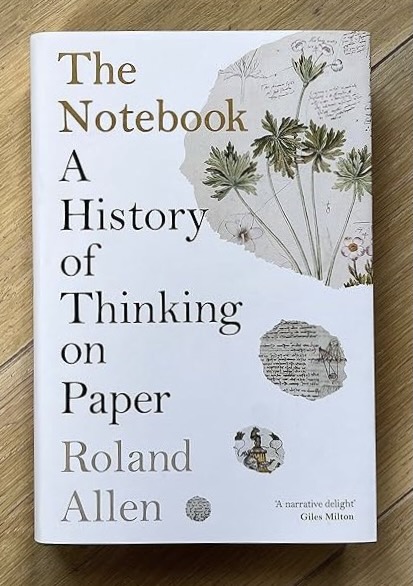
It should be no wonder, then, that I was delighted to discover Roland Allen’s marvelous The Notebook, A History of Thinking on Paper (2023). The book’s title doubles as its description. Allen chronicles in fascinating detail how both prominent and everyday people have used notebooks or their historical predecessors, going back to the days of stone tablets.
Allen’s long introduction starts us in the present, exploring the Moleskine notebook phenomenon and the underlying draw of this brand and others in our digital age. It reassured me that I have not been alone in experiencing the attraction of printed notebooks, even if in some ways it’s easier for us to simply open our laptops and start typing away.
In trying to nail down that appeal, the caption accompanying a photo of a modern notebook explained the heart of it for me: “The infinite potential of the blank page.” Awesome.
 More Than A Song